How to Pick Running Shoes: A Beginner's Complete Guide

Key Highlights
The best running shoes depend on your running surface, goals, and foot shape.
A perfect pair should feel good right away, with no break-in period needed.
Proper support matters because it helps manage impact forces during each step.
Road shoes, trail shoes, and stability options are built for different needs.
Fit is key, so check toe room, width, and heel hold before buying.
Your gait, arch type, and running style all shape the right choice.
Introduction
Finding the right running shoe can feel confusing when every brand promises comfort, speed, and support. If you are buying your first pair, the goal is simple: choose the perfect pair for your feet, your runs, and your routine. New running shoes should protect your body, feel natural from the start, and match where you plan to run. This guide breaks down the process in a clear way so you can shop with confidence and avoid common beginner mistakes.
Understanding the Basics of Running Shoes
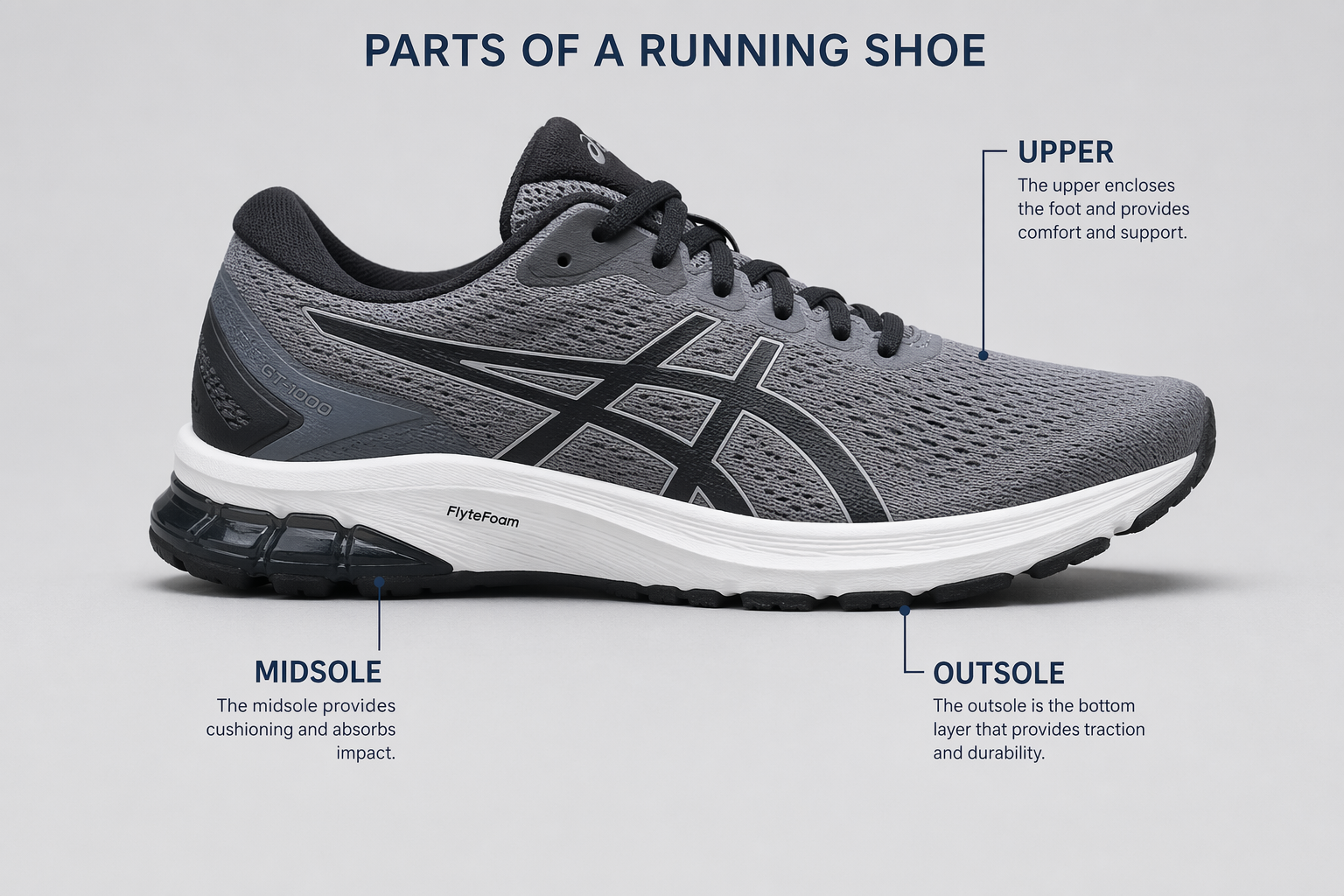
Before you buy any running shoe, it helps to know what you are looking at. Each part of the shoe plays a different role in comfort, fit, grip, and support. The upper holds your foot, the midsole handles shock absorption, and the outsole meets the ground.
Once you understand these basics, comparing shoes gets much easier. You can focus less on marketing and more on how a running shoe supports your body, matches your routine, and feels during actual movement.
Why Choosing the Right Running Shoes Matters
The right shoes do more than cover your feet. They cushion, support, and protect them while giving your whole body a solid base. That matters whether you run for fun or with a goal in mind. The best running shoes improve comfort and help make each run feel more stable.
Every step creates impact forces, especially on hard surfaces like pavement. A shoe with the right support and cushioning helps absorb and spread that stress. Drop also matters because it can influence heel strike, midfoot landing, or forefoot contact without forcing you into an unnatural stride.
So, what should you look for when picking the best running shoes for yourself? Start with fit, support, running surface, and how the shoe feels out of the box. If it matches your body and your running experience, you are on the right track.
Common Types of Running Shoes Available in India
Not every shoe is built for the same job. The main differences between various running shoe models come down to surface, support, structure, and cushioning. Some are made for smooth roads, while others are built to handle uneven ground or extra inward foot motion.
Here are the common types you will see:
Road shoes for pavement, concrete, and smooth packed paths.
Trail shoes for dirt, rocks, roots, mud, and uneven terrain.
Neutral running shoes for neutral pronation or outward rolling feet.
Stability shoe models for runners who overpronate and need additional support.
Minimalist shoes for people who want more ground feel and less foam.
If you are a beginner, road shoes or neutral running shoes are often a good place to start. Still, your fit, running surface, and support needs matter more than the label on the box.
Factors to Consider Before Buying Running Shoes
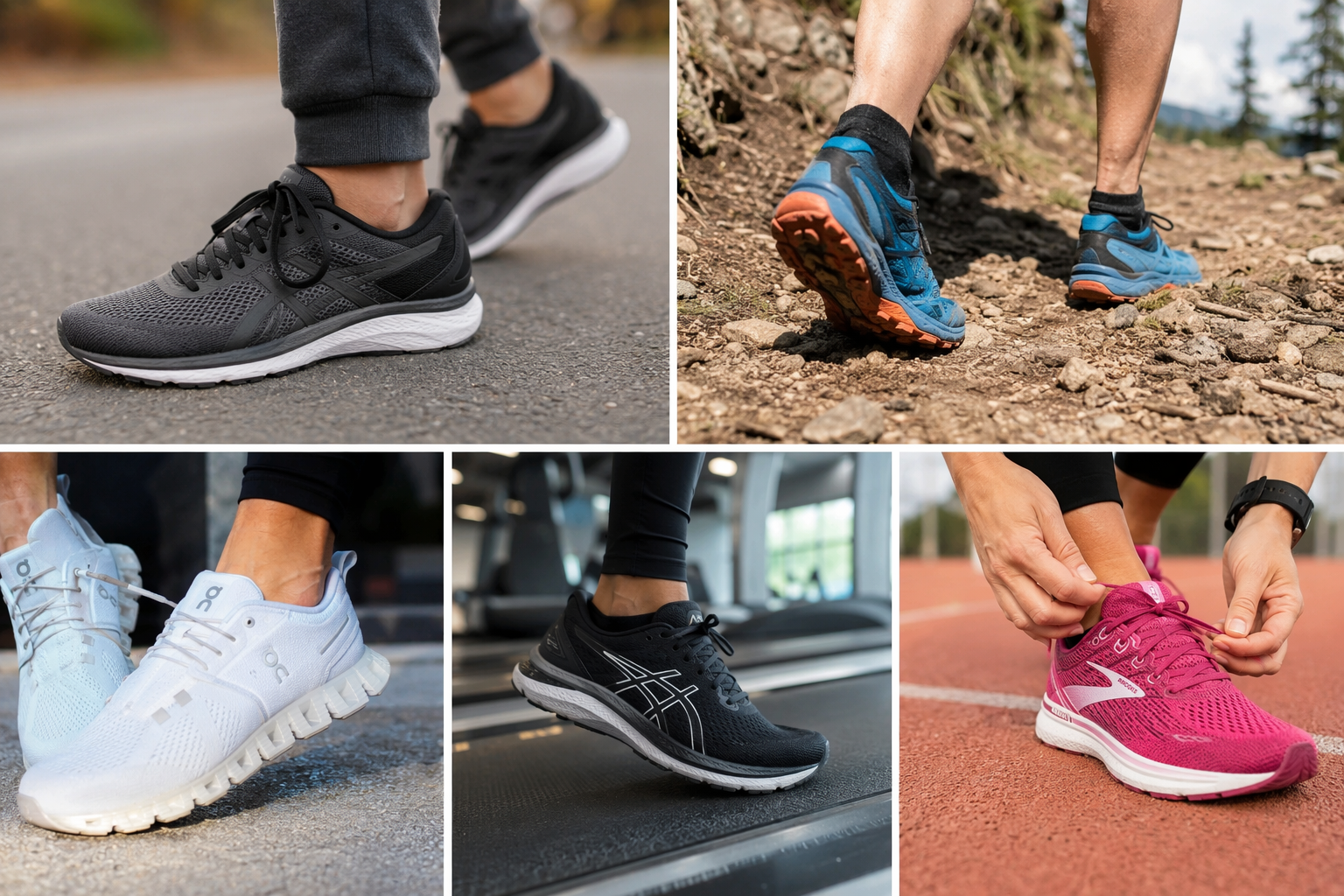
A running shoe should match how and where you run. Before choosing a pair of shoes, think about your weekly mileage, pace, goals, and the running surface you use most often. A shoe for daily runs on pavement will not feel the same as one made for trails.
Fit also plays a huge role. The right running shoe should suit your foot size, width, and shape without rubbing or slipping. The next sections will help you narrow those choices in a practical way.
Identifying Your Running Goals and Frequency
Start by asking what kind of runner you are right now, not what you hope to be six months from now. Are you heading out for short jogs a few times a week, building fitness, or working toward a race? Your answer shapes the kind of shoe you need.
If most of your runs are easy miles, daily trainers usually make the most sense. They are built for comfort, steady use, and general versatility. If you also plan recovery runs, a cushioned and comfortable model can feel better on tired legs than a firmer, faster option.
Some runners want a second shoe later for speed training, but beginners usually do well with one reliable everyday model. The right shoe for your running style is the one that supports your current routine, not the most specialized option on the shelf.
Considering Your Running Terrain: Road, Trail, or Track
Yes, you should absolutely consider terrain when picking shoes. Your running surface changes how much grip, protection, and structure you need. A shoe built for smooth pavement may feel unstable or underprotected on rough ground, while a trail model can feel stiff on regular roads.
Keep this simple:
Choose road shoes for pavement, concrete, and smooth packed dirt.
Pick trail shoes for uneven terrain, mud, rocks, and roots.
Use trail shoes when you run often on gravel paths or dirt routes.
Look for grip-focused outsoles and added protection off-road.
Stay with smoother outsoles for faster, more natural road running.
Think about where you run most, not just once in a while. If your routes mix surfaces, choose the shoe that best suits the terrain you use the majority of the time.
How Your Foot Type Influences Shoe Choice
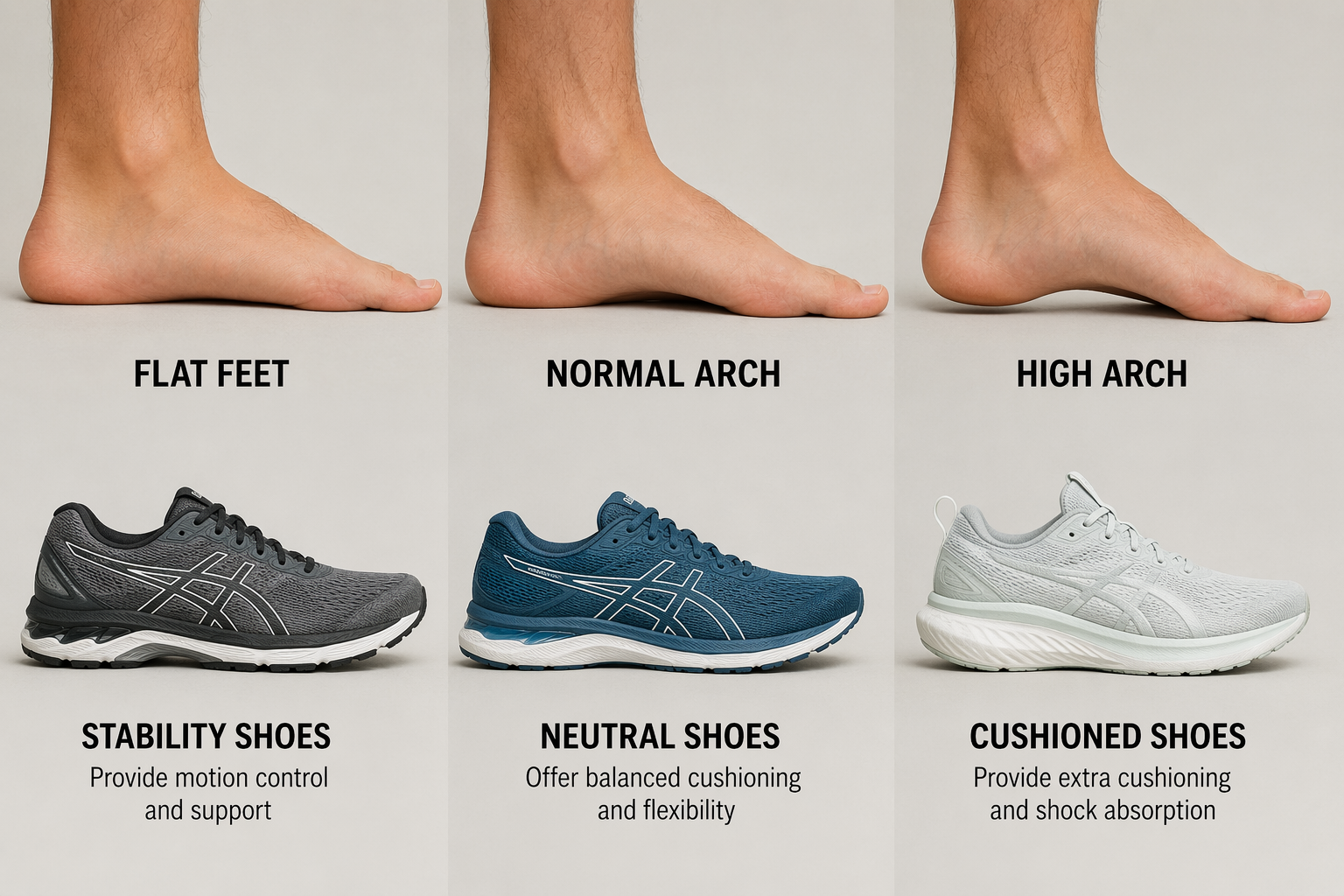
Your foot shape affects how a shoe fits and supports you. Some people have flat feet, some have high arches, and others fall in the middle. That changes how the shoe feels through the arch, heel, and toe area.
You can often tell if a shoe suits your foot type by how stable and natural it feels when you walk or jog in it. A neutral shoe works for many runners, but your arch and motion pattern still matter.
Determining Your Arch Type: Flat, Neutral, or High
A good first step is understanding your arch type. This gives you a clearer idea of what may feel supportive or awkward underfoot. While arch type is not the only factor, it helps narrow your options before you start trying on shoes.
In simple terms:
Flat feet may need a shoe that feels steadier and more guided.
A neutral arch often pairs well with neutral pronation and flexible choices.
High arches may prefer cushioning that softens landing and pressure.
Your foot type should always be checked along with overall fit.
How do you know your foot type for shoe selection? Look at how your current shoes wear and notice how your feet feel during runs. Then try several models and compare comfort, support, and natural movement instead of relying only on labels.
Understanding Pronation and Its Impact on Shoe Selection
Pronation describes how your foot rolls after it lands. Most runners have some inward movement, and that is normal. Neutral pronation helps absorb force naturally. Problems can show up when the movement becomes too far inward or too far outward.
If your foot rolls inward too much, that is overpronation. If it rolls outward, that is often called underpronation or supination. One easy clue is wear on old shoes. Extra wear near the big toe and inside edge can point to overpronation, while outside-edge wear may suggest underpronation.
A suitable shoe should feel steady without forcing your stride. If your foot rolls in a normal way, neutral models are often enough. If not, you may need a shoe with more structure to guide motion and improve comfort.
The Importance of Your Running Style
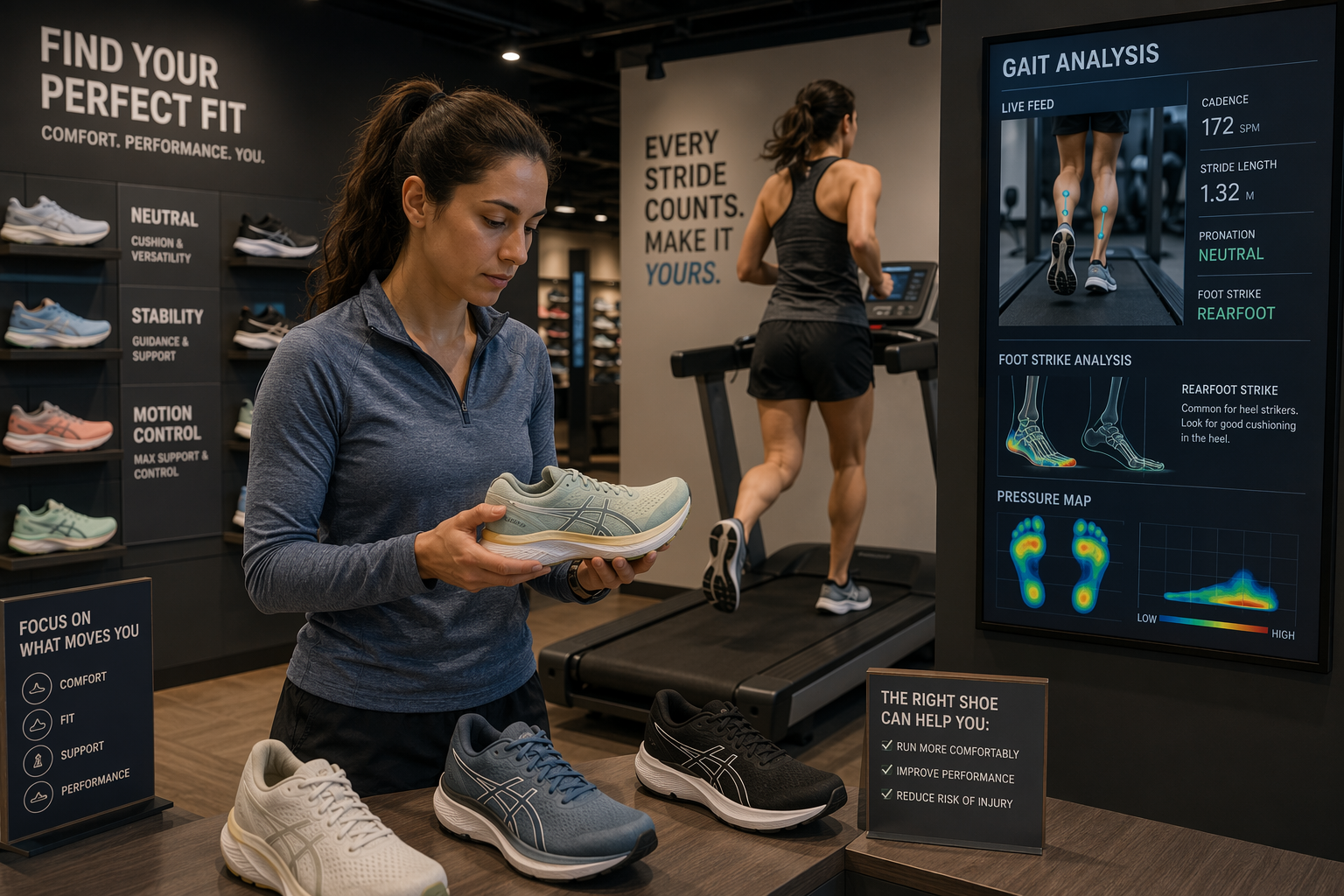
Your running style affects how a shoe feels from the first step. Things like heel strike, cadence, and gait pattern influence where pressure lands and what type of support feels natural. That is why one popular model may feel great for someone else and wrong for you.
The best running shoe for your running style is the one that works with your movement, not against it. A closer look at gait and foot motion makes that easier to understand.
Assessing Your Gait: What Is Gait Analysis?
Gait analysis is a way to look at how you move when you walk or run. It helps you spot patterns in landing, balance, and foot motion. For beginners, it can offer useful clues about what feels stable and what does not.
A basic gait check may show:
Whether you land with a heel strike, midfoot, or more on the ball of the foot.
If your gait pattern looks smooth or uneven from side to side.
Whether your foot collapses inward, suggesting overpronation.
If one shoe wears faster than the other.
It is also a helpful way to check fit. Is there a way to check if your running shoes fit perfectly? Yes. Walk and jog in them, watch for slipping or rubbing, and notice whether your stride feels smooth and balanced right away.
Matching Shoes to Overpronation, Underpronation, or Neutral Feet
Once you understand how your feet move, matching the shoe becomes easier. A neutral shoe is usually best for runners with neutral motion or outward rolling feet. It does not try to correct a movement pattern that may not need correction.
If you overpronate, a stability shoe may help. These models often use firmer foam or medial posts in key areas to add guidance and additional support. That structure can help manage excess inward motion and make repeated landings feel more controlled.
Whatever category you choose, the goal is not to force your body into a perfect form. It is to find a shoe that helps you handle impact forces comfortably while keeping your stride natural and confident.
Anatomy of a Running Shoe Explained
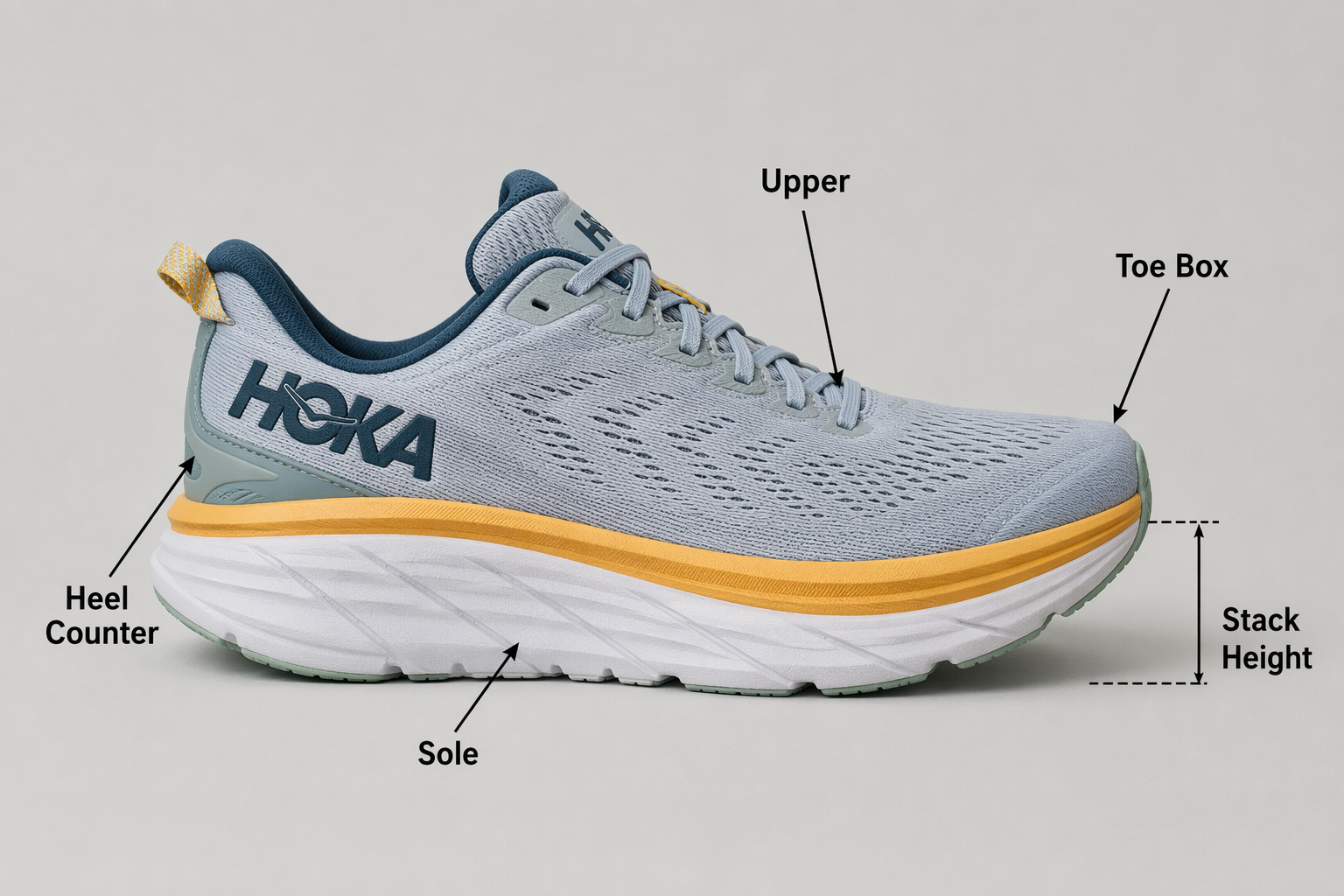
If you want to make a smart choice, learn the basic anatomy first. Each part of the shoe affects fit and performance in a different way. The top part of the shoe wraps your foot, the heel counter holds the back in place, and the sole affects cushioning and grip.
You should also pay attention to the toe box and stack height. These details shape comfort, stability, and the overall feel of the ride. Let’s break down each area.
Uppers: Materials and Breathability
The upper is the top part of the shoe where the laces sit, and it has two main jobs: protect your foot and hold it in place. Because it wraps around your foot, it is usually the first thing you notice when trying on a shoe.
Most uppers use mesh or knit materials for breathability. Shoes made for comfort, stability, and durability often have more padding and a firmer heel area. Lighter shoes made for faster efforts usually use thinner material, which can improve airflow but may feel less plush.
Some models also include a waterproof membrane for wet weather. That can help keep rain out, but it may also trap more heat. Proper fit depends on how the upper hugs your foot without pressure points, whether in New Balance or any other brand.
Midsoles: Cushioning and Support Features
The midsole is the heart of the running shoe. It handles shock absorption, cushions impact, and shapes how the shoe rides. One of the easiest things to notice is stack height, which is the amount of foam between your foot and the ground.
Some runners like soft midsoles for comfort during easy efforts. Others prefer firmer midsoles because they feel more stable and waste less energy. More foam does not always mean a softer feel. You can find max-cushion models that still feel firm and controlled.
There are also responsive designs that use advanced foam or carbon plates to create a springier ride. For terrain, that matters too. Smoother surfaces may suit lighter, quicker midsoles, while rougher routes often benefit from a more stable platform.
Outsoles: Grip and Durability for Indian Terrain
The outsole is the bottom layer that contacts the ground. It helps with better grip, protects the midsole, and affects how long the shoe lasts. Rubber coverage, thickness, and tread pattern all change the feel underfoot.
For mixed and changing conditions, outsole design matters a lot:
Road shoes usually have flatter, smoother outsoles for pavement.
Trail shoes use more aggressive tread for loose or uneven ground.
A rock plate can protect your feet from sharp stones and roots.
Some shoes use a wider base to improve stability on rough surfaces.
So yes, terrain matters when choosing shoes. If you mostly run on roads, you likely do not need deep lugs. But if dirt, gravel, and off-road routes are part of your weekly routine, extra grip and protection make a real difference.
Differences Between Men’s and Women’s Running Shoes
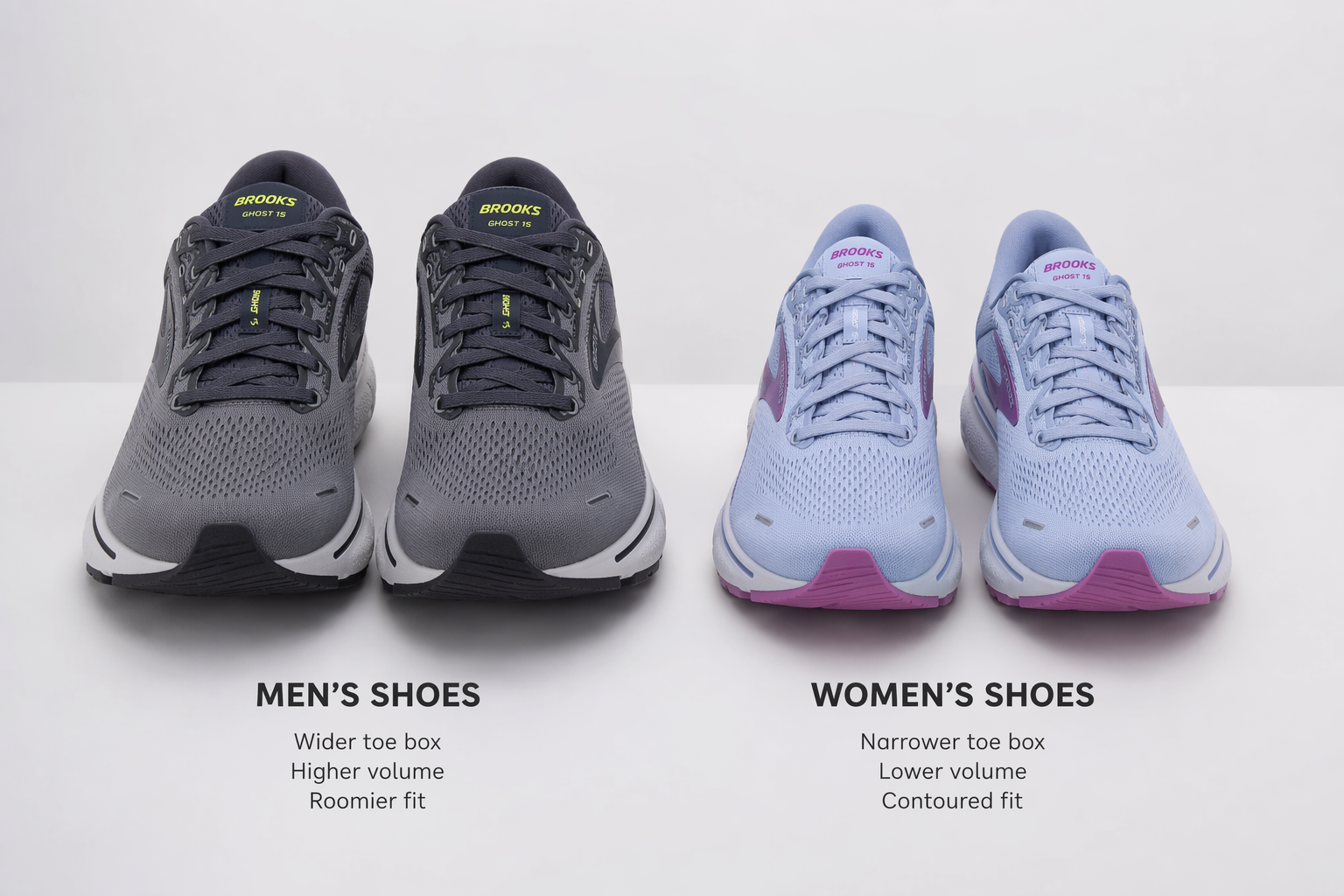
Yes, there can be a difference between men’s and women’s running shoes, though fit matters more than the label. Brands may shape the same running shoe differently through the heel, forefoot, or overall volume. That is why two shoes with the same name may not feel identical.
You should always focus on comfort, toe box space, and sizing first. Whether you shop New Balance or another brand, the best option is the one that matches your feet.
Unique Design Features for Each Gender
Brands sometimes adjust fit details between men’s and women’s models. These changes can include the shape of the heel, the width through the forefoot, and the overall volume of the upper. Even when the midsole foam is similar, the fit can feel different on foot.
Here is a simple comparison:
Feature | What May Differ |
|---|---|
Toe box | One version may feel roomier or more tapered |
Heel counter | The rear hold may feel narrower or more secure |
Wider base | Some models may feel broader underfoot for stability |
Stack height | The listed foam height can vary by model version |
Overall fit | Volume and shape may change even within the same shoe line |
That said, the label does not decide your fit. If one version feels better, choose it. Your comfort and support matter more than whether the box says men’s or women’s.
Sizing and Fit Considerations
Sizing is one of the biggest fit factors, and it is not always consistent across brands. A new pair in one brand can feel very different from the same size in another because each company uses its own foot shape, or last.
You should measure both feet, since one may be slightly larger. Try shoes later in the day when your feet are a bit swollen. Look for extra room in front of the toes, a secure heel, and enough width so your foot is not squeezed.
If regular shoes always feel tight, check for wide options. Many runners get a more comfortable fit simply by choosing the right width. Proper sizing is not about going bigger by default. It is about matching the shoe to your actual foot shape and movement.
Beginner’s Guide: What You Need to Get Started
You do not need a complicated setup to start running. A good running shoe is the most important piece of essential equipment, especially for daily use. It should feel comfortable right away and match your surface, support needs, and routine.
New running shoes are a strong starting point, but small fit details matter just as much. The next two sections cover what else helps and where you can find useful guidance.
Essential Equipment for New Runners
For most beginners, the list is short. You need a reliable running shoe, the socks or insoles you plan to use, and enough time to try things on properly. You do not need a highly specialized setup on day one.
A smart starter kit includes:
A new pair of daily trainers for regular runs and general comfort.
The socks or orthotics you normally use, since they change fit.
Enough toe room and secure lacing to reduce rubbing.
A shoe that feels good for both short jogs and recovery runs.
The main factor in proper fit is how the shoe feels on your foot, not how advanced it sounds. If the shoe holds your heel well, gives your toes space, and stays comfortable while moving, you are off to a good start.
Resources and Tools for Finding the Right Shoes
There is no single easy way to choose the right shoe without trying some on, but a few tools can make the process smoother. The most helpful starting point is getting both feet measured and comparing different brands in person if possible.
Useful ways to narrow your choice include:
Checking whether a brand offers wide options or a roomier toe area.
Trying on multiple models to learn your personal preference.
Using size charts after measuring both length and width.
A fit session helps because brands shape shoes differently. One model may be wider through the midfoot, another narrower in the heel, and another higher in volume overall. Once you know what fits, future shopping becomes much easier.
Step-by-Step Guide to Picking the Perfect Running Shoes
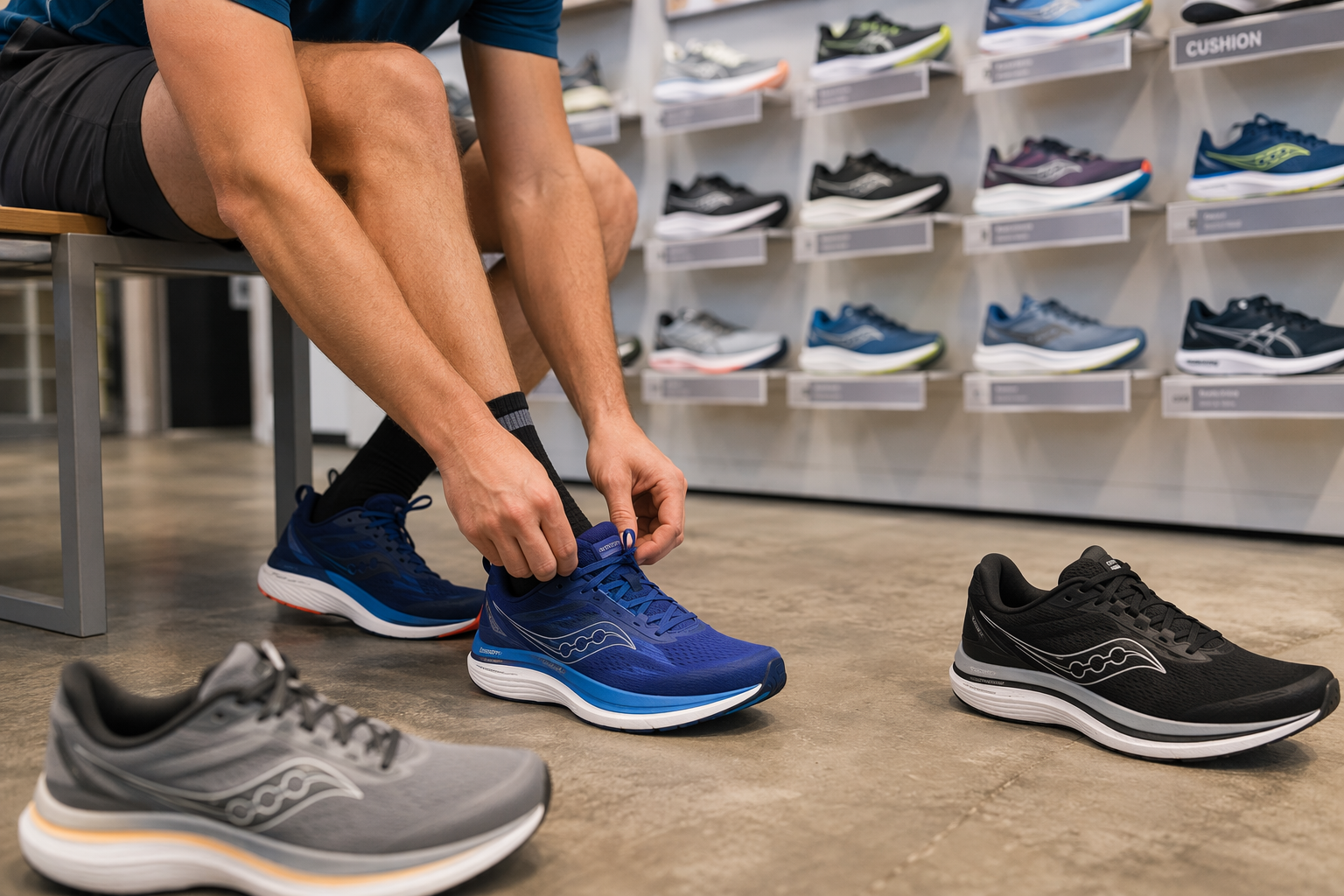
Picking the perfect pair gets easier when you follow a clear process. Instead of guessing, you can narrow down the best running shoes by checking fit, support, surface, and feel one step at a time. That helps you avoid buying a new pair of shoes based only on looks or hype.
Use the steps below when shopping for any running shoe. They keep the process practical and beginner-friendly.
Step 1: Measure Your Feet Accurately
Start with accurate sizing. Foot size can change over time, so do not assume your old number is still right. Measure both feet because one is often larger. A good fit should match the bigger foot, not the smaller one.
Try shoes at the end of the day if possible. Your feet swell as the day goes on, and that gives you a more realistic idea of how the shoe will feel during a run. You want extra room at the front, about a thumbnail’s length, so your toes are not jammed.
Is there a way to check if your running shoes fit perfectly? Yes. Look for secure hold through the midfoot and heel, plus enough space to wiggle your toes. Shoes that feel tight or create hot spots in the store usually will not improve later.
Step 2: Try Different Brands and Models
No brand fits every foot the same way. Each company uses a different shape, so one running shoe may feel snug in the heel, while another offers a roomier forefoot. That is why trying several models matters, even if you already like a brand such as New Balance.
When comparing shoes, pay attention to:
How the shape matches your foot and your personal preference.
Whether wide options are available if standard width feels tight.
How secure and natural the shoe feels during movement.
What should you look for when picking the best running shoes for yourself? Not the most expensive model. Not the flashiest one either. Look for the brand and shape that fit your foot best, with comfort and support that feel right from the first try.
Step 3: Test Shoe Comfort and Fit
Comfort should be immediate. A running shoe should feel good right out of the box, with no break-in period needed. If you notice rubbing, heel slip, or pressure during the try-on, do not assume it will disappear after a few runs.
Pay close attention to the toe box. You want enough room to wiggle your toes without sliding around too much. Some runners like a foot-shaped fit with more space up front, while others prefer a slightly closer wrap for a more comfortable fit.
The best test is simple: walk and jog in the shoe. Ask yourself whether it feels smooth enough for easy miles and stable enough to trust. If the answer is yes and nothing pinches, you may have found a strong option.
Step 4: Check for Proper Support and Cushioning
Support and cushioning should match your body and your running style. Some runners want soft midsoles for comfort, while others feel better in firmer shoes that offer a steadier platform. The goal is not maximum foam at all costs. It is the right balance for you.
As you test shoes, look for:
Good shock absorption without feeling unstable.
Additional support if your foot rolls inward too much.
A shape and drop that work with your natural heel strike or landing style.
Proper fitting shoes should feel balanced from heel to toe. If the shoe feels too tall, too squishy, or too rigid for your stride, keep looking. Support should help your motion, not fight against it.
Step 5: Walk and Run in the Store
Do not make your final choice while standing still. You need to walk and, if possible, jog in the shoe. Movement reveals problems that are easy to miss when you are just checking the fit with your hands.
As you move, notice your heel strike, how the shoe rolls forward, and whether your gait pattern feels smooth. A shoe that looks fine on paper may still feel awkward once you start running. That is especially true if you plan to use it often for recovery runs or steady daily outings.
This is one of the best ways to check if a running shoe fits perfectly. If your foot stays secure, your stride feels natural, and nothing rubs or slips, that model deserves serious consideration.
Common Mistakes Beginners Make When Choosing Running Shoes
Many beginners buy a running shoe too quickly. They focus on color, trends, or what worked for a friend instead of checking fit, support, and surface. That often leads to a new pair that looks great but feels wrong after a few runs.
Another mistake is ignoring personal preference. Even a neutral shoe with strong reviews may not suit your foot or your stride. The sections below cover two of the most common problems.
Ignoring Foot Type and Gait
One of the biggest mistakes is choosing a shoe without understanding your foot shape or gait pattern. If you overpronate, a very flexible neutral model may not feel supportive enough. If you have a narrow foot, a very wide forefoot may create too much movement.
It also helps to think about which part of the shoe is causing a problem. Is the heel loose? Is the toe area cramped? Is the midsole too soft for your stride? Knowing that makes it easier to solve the issue instead of blaming the whole shoe.
A running shoe should work with your movement and fit your foot from the start. When beginners skip that step, they often end up with discomfort that could have been avoided by a better try-on process.
Choosing Style Over Functionality
It is easy to get pulled in by a sharp design or a popular name. But style does not tell you whether a shoe has proper support, fits your foot, or suits your usual routes. The best running shoes are the ones that perform well for you, not just the ones that photograph well.
Common style-over-function mistakes include:
Buying sleek race-inspired shoes for regular daily training.
Choosing road shoes even though most runs happen off-road.
Picking a shoe because someone else likes it, not because it fits.
Looks matter less once you are a few miles in. Function matters every step. Always test comfort, support, and surface match before letting appearance decide for you.
Tips for Ensuring the Right Fit
The right fit should feel secure but not restrictive. In any running shoe, you want enough extra room in the front for toe movement, while the midfoot and heel stay comfortably locked in place. That balance helps prevent rubbing and slipping.
You should also pay attention to early warning signs. A tight toe box, pressure on top of the foot, or hot spots during the try-on usually mean the shoe is not the right match. Here’s what to watch for.
Should You Buy a Size Bigger? Pros and Cons
Sometimes runners do need slightly more space than in casual shoes, but going bigger is not always the answer. The goal is proper sizing, not simply choosing a larger number. Your new pair of shoes should feel secure while still leaving room for toe movement.
A little extra room can help because:
Feet swell during the day and during runs.
Toes need space to move forward naturally.
Tight shoes can lead to black toenails.
Front space can reduce pressure on descents or longer runs.
But too much room can create sliding and rubbing. Instead of sizing up automatically, measure both feet, try shoes on later in the day, and look for that thumbnail-length space in front. That is a better fit check than guessing by size alone.
Signs That Your Shoes Don’t Fit Properly
Poor fit often shows up quickly if you know what to notice. A running shoe that is wrong for your foot usually feels off during the first try, not after weeks of use. Listen to those small warning signs.
Watch for these problems:
Hot spots or rubbing in the heel, midfoot, or toes.
Pressure under the ball of your foot or across the forefoot.
A cramped toe box or toes sliding too much inside the shoe.
You may also notice heel lift, lace pressure, or a sloppy feel when walking. These are all signs the fit is not right. A good shoe should feel secure, smooth, and natural from the start, without forcing you to tolerate discomfort.
Maintaining and Replacing Your Running Shoes
Even the best shoes wear down over time. For daily use, cushioning and support slowly change, even if the upper still looks fine. That means your running shoe may stop feeling protective before it looks worn out.
Most runners eventually need a new pair based on mileage, wear, and feel. Good care can help, but it will not make a shoe last forever. The next sections explain what to expect and how to extend shoe life.
How Often Should You Replace Running Shoes?
A running shoe usually lasts about 300 to 500 miles, though there is no perfect number for everyone. Runner weight, foam type, and shoe build all affect lifespan. Some shoes lose their feel sooner, especially if used heavily for daily runs.
It may be time for a new pair if:
The cushioning feels flat or less protective.
The outsole shows heavy wear in key areas.
Your shoes feel less comfortable during easy miles than they used to.
Do not wait for the shoe to fall apart. If the ride changes, support fades, or your old pair stops feeling reliable, replacement is worth considering. Comfort and protection matter more than squeezing out a few extra weeks.
Caring for Your Shoes to Extend Their Life
Good care helps your shoes last longer and feel better between runs. It will not stop natural wear in the foam, but it can protect the upper, outsole, and overall structure of the running shoe. A well-kept pair usually stays more consistent over time.
Simple habits help:
Use them for running instead of all-day casual wear.
Let them dry naturally after wet runs.
Keep the upper clean so material does not stiffen or rub.
Be especially careful with shoes that include a waterproof membrane, since trapped moisture and heat can affect comfort. Also, pay attention to fit changes. If the shoe starts creating hot spots or loses hold, that may signal wear even before the outside looks damaged.
Conclusion
Choosing the right running shoes is a crucial step for anyone looking to start or enhance their running journey. By understanding your foot type, gait, and the specific features of different shoe models, you can find the perfect fit that supports your running style and goals. Remember, it's not just about aesthetics; the right footwear can help prevent injuries and ensure comfort while you run. Don't hesitate to take your time in trying on various shoes and seeking professional advice if needed. Happy running, and may you find the joy in every stride! If you're ready to elevate your running experience, get a free trial/demo today.
Frequently Asked Questions
Understanding the ins and outs of selecting the right footwear can lead to a more enjoyable running experience. One common question revolves around the best type of shoe for specific foot shapes. For those with flat feet, stability shoes with medial posts provide better support, while neutral pronation often calls for a neutral shoe with very soft midsoles. Another frequent inquiry relates to the importance of toe drop. A lower drop can benefit forefoot strikers, enhancing comfort on varied surfaces. Additionally, many runners wonder about the significance of stack height. A good balance can facilitate impact absorption and ground feel, essential when traversing uneven terrain or during recovery runs. Ultimately, finding a new pair involves understanding your unique gait pattern, personal preference, and the environments where you'll be running. Armed with these insights, stepping into your perfect pair becomes an easy way to elevate your daily runs!
Can I use running shoes for other sports?
A running shoe can work for casual gym use, but it is built mainly for forward movement, heel strike patterns, and a specific running surface. For sports with lots of side-to-side motion, you may need something with different grip, stability, and lateral support.
Are there specific shoes for different terrains?
Yes. Road shoes are made for smooth pavement and packed paths, while trail shoes are designed for uneven terrain with stronger grip and more protection. Some trail models also include a waterproof membrane for wet weather, though that can reduce breathability in warmer conditions.
How do I know my foot type for shoe selection?
Start by looking at your foot shape, arch type, and wear patterns on old shoes. Flat feet may need more guidance, while neutral pronation often works well in a neutral shoe. Watching how your foot moves during walking or running can also help narrow your choice.
Is there a difference between men’s and women’s running shoes?
Yes, there can be small differences in sizing, heel shape, toe box fit, and sometimes stack height between versions of the same running shoe. In brands like New Balance, the better choice is simply the one that fits your foot best and feels most natural.